Introducing Hope in a Secular Age
In this introductory post, Devin Singh and Rick Elgendy introduce the main themes of Hope in a Secular Age and summarize the interventions of each contributor to the symposium.
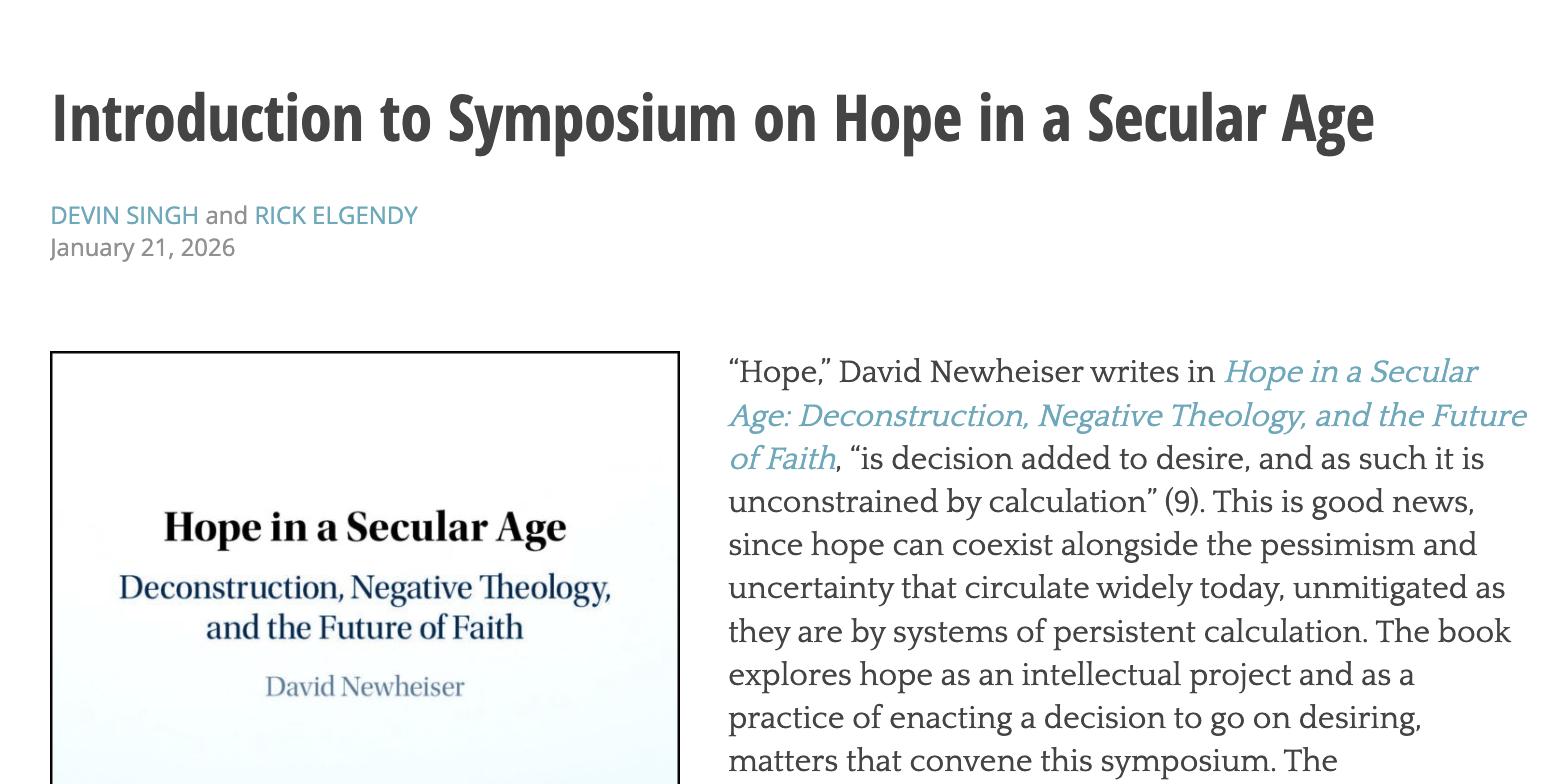
In this introductory post, Devin Singh and Rick Elgendy introduce the main themes of Hope in a Secular Age and summarize the interventions of each contributor to the symposium.
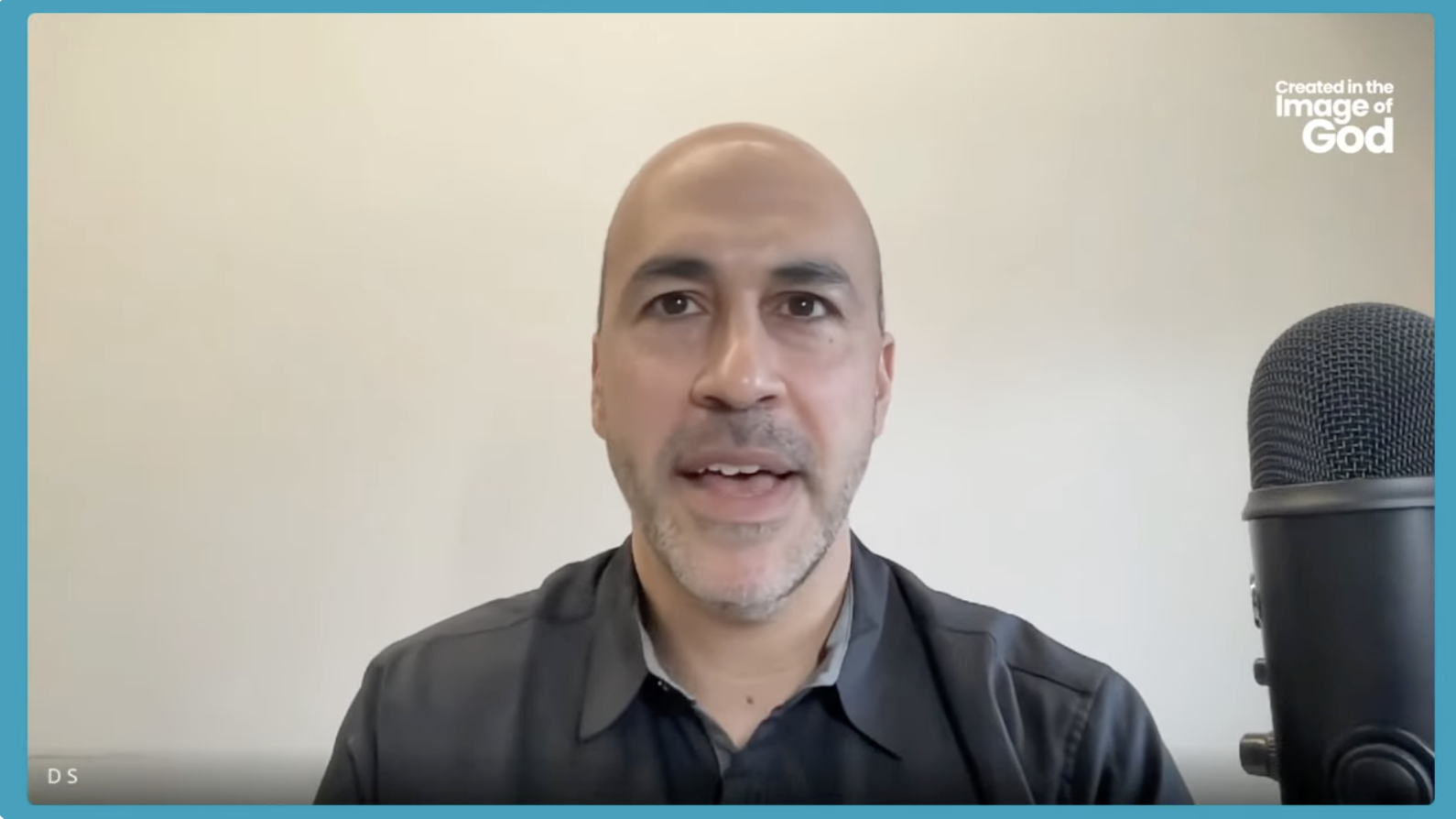
I joined the “Created in the Image of God” podcast hosted by Wade Fransson to discuss my work on religion and economics.

In this roundtable discussion I joined scholars and practitioners to discuss blockchain, cryptocurrency and religion.
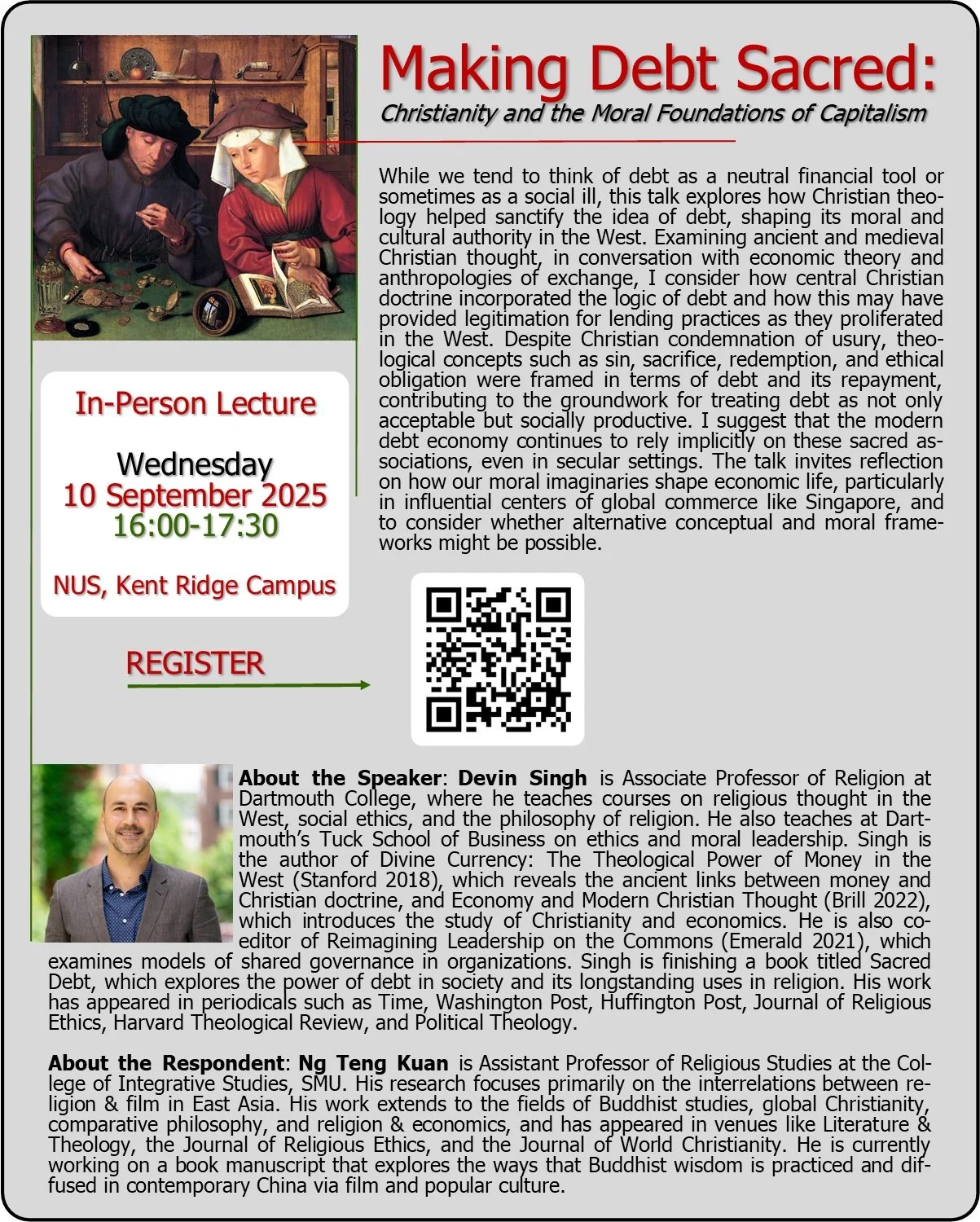
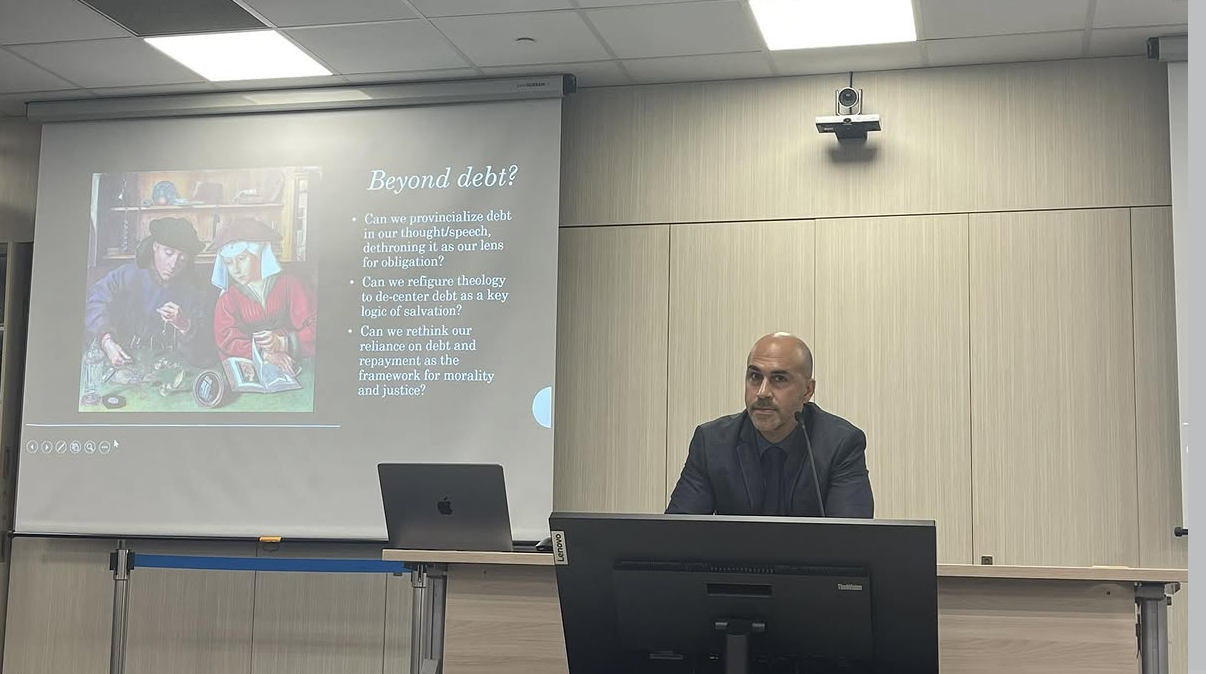
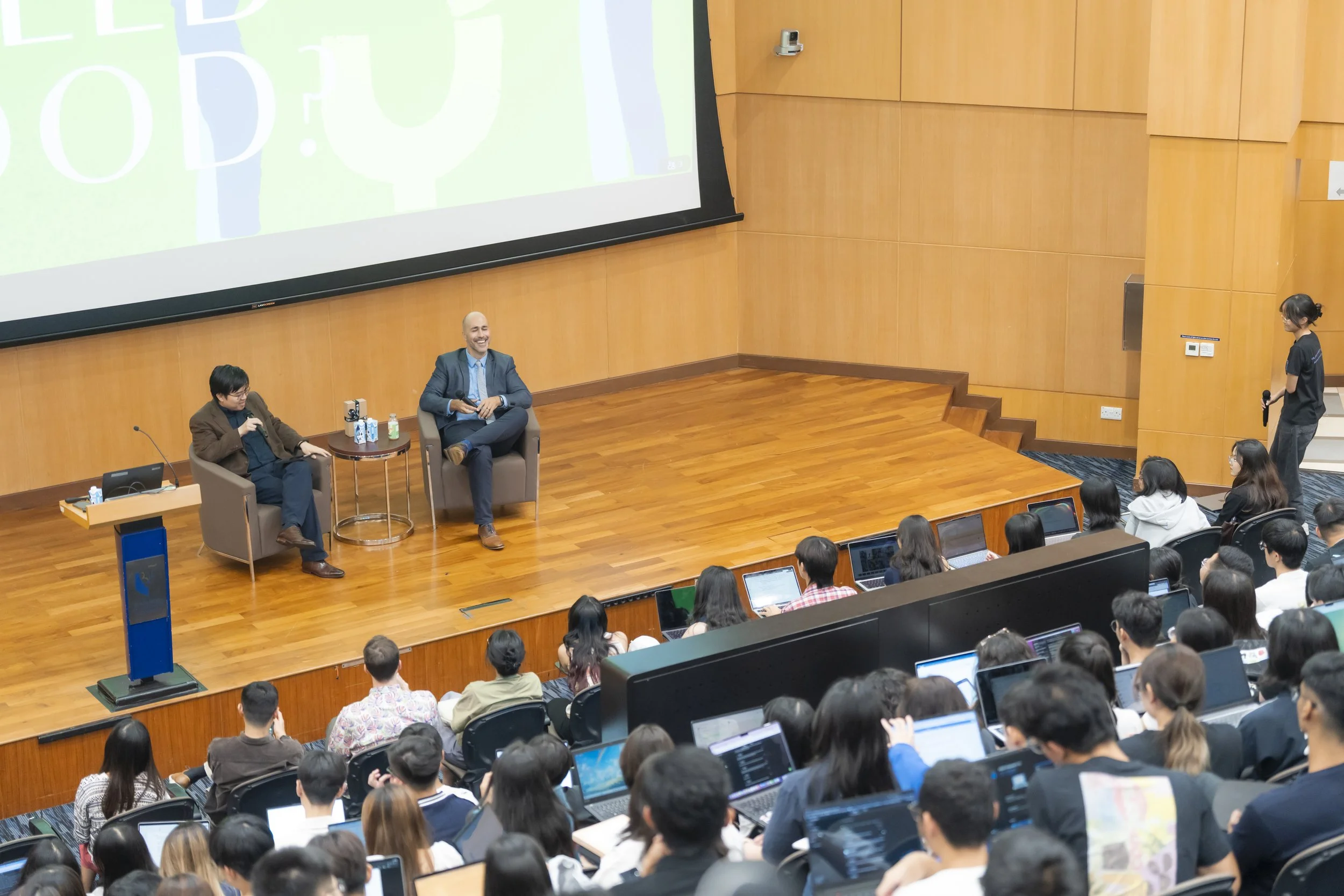
I was thrilled to speak at National University Singapore on debt, the sacred, and the moral foundations of Capitalism.
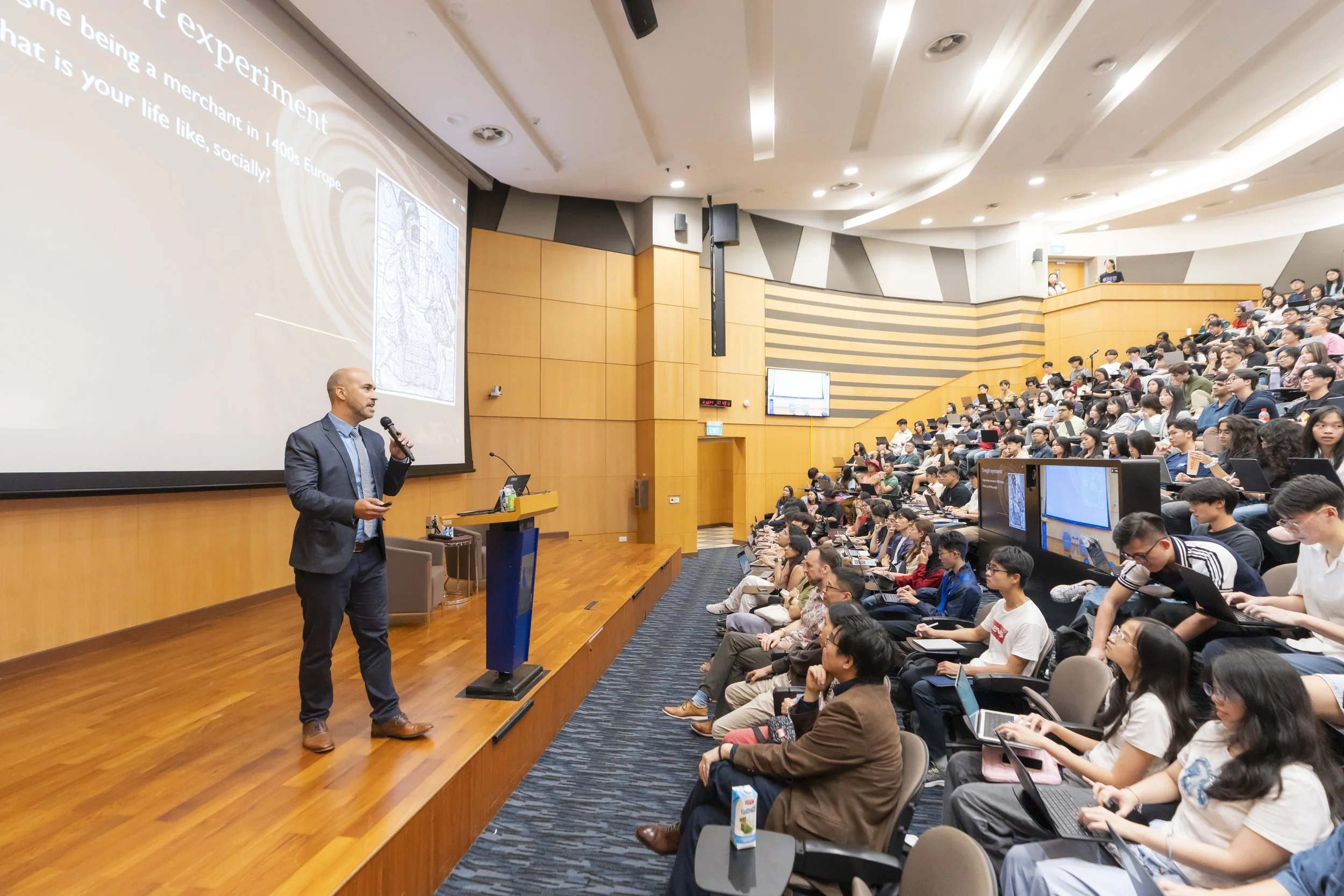
Synopsis:
For centuries, Christian theology cast greed and avarice as grave moral failings, corrosive both to the soul and to society. Yet in modern economic thought, a radical reimagining took hold: greed and self-interest were no longer merely vices to suppress, but engines of productivity, innovation, and wealth. How did this shift occur and what does it mean for us today? This lecture recalls the theological and philosophical origins of the idea of beneficial self-interest, as it both used and departed from earlier Christian moral teachings. We examine what “greed” and “self-interest” mean and ask whether they bring satisfaction, fulfillment, and communal connection. We also consider visions of economic life involving cooperation, reciprocity, and mutual flourishing, exploring alternatives to zero-sum competition and the possibility of more humane and sustainable forms of exchange.
I recently joined the great John Caputo for a conversation hosted by GCAS and Creston Davis to discuss the implications of the election of Pope Leo XIV, the first pope from the United States and only second pope hailing from a non-predominantly Catholic country.
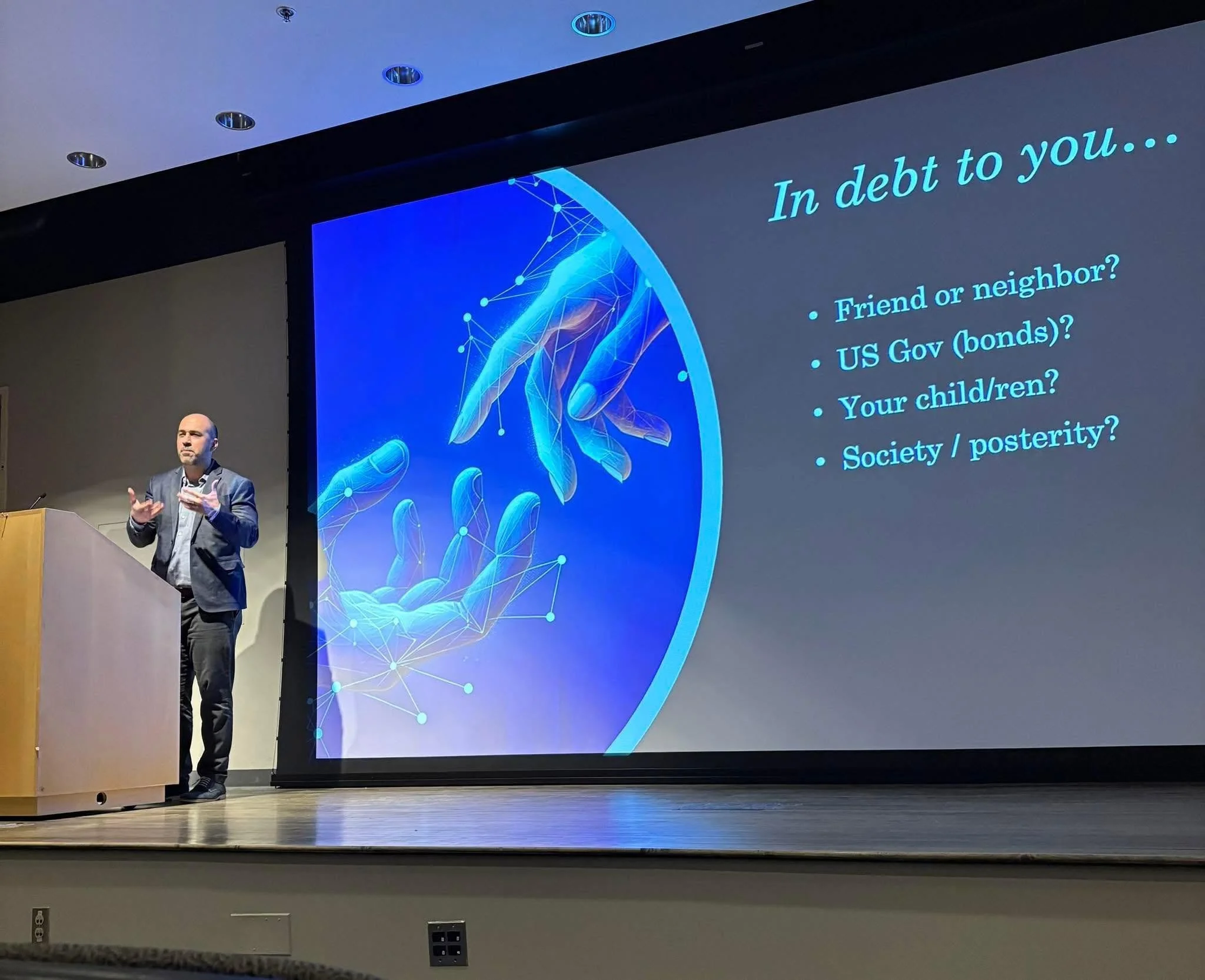
I spoke on “The Theological Weight of Debt” to students and faculty at St Olaf College. It was a wonderful visit and set of conversations.

In spring 2023, Dartmouth’s Design Initiative held the first gathering of award-winning speculative fiction sci-fi and fantasy authors who met with a small group of faculty.
We faculty shared our research and had intensive conversations and design thinking exercises with these authors. The goal was to provide inspiration for them to write short stories imagining human futures in light of our research. The plan is to disseminate research in a more accessible, engaging way through the power of story and to flesh out possible futures.

Watch to my conversation with Patrick Huey, host of At the Podium with Patrick Huey, as we discuss religion, economics, personal growth, and various other themes.
Listen to my conversation with Patrick Huey, host of At the Podium with Patrick Huey, as we discuss religion, economics, personal growth, and various other themes.

I was interviewed by CNBC about why student loan forgiveness debates spark such anger and backlash. The linked article captures some of my answer and includes perspectives from other experts. Below is my full response:
Hi Professor Singh,
Hope this email finds you well. I’m a reporter at CNBC, working on a story about why the idea of student loan forgiveness in the U.S. makes some people just so heated. I’ve been covering student debt related issues for years, and whenever there’s forgiveness, the angry emails and comments pour in. I thought you might have some really interesting thoughts, and I’d love to hear from you! Questions below:
—Why do you think student loan forgiveness is such a partisan issue in the U.S.?
—Why, do you think, are some Americans so angered by the idea of college graduates getting their debts forgiven? What is it about student loan forgiveness?
—What role might envy play? Or the fact that most Americans don’t have a college degree?
—Why do some have such strong beliefs that repaying debt is moral/responsible?
Answers:
One reason why loan forgiveness is such a partisan issue is that members of each party have different relationships to the educational system. Statistically, a higher percentage of Democratic voters graduated from a four-year college and/or attended graduate school. So student loan forgiveness may affect more Democrats than Republicans directly. The fact that most Americans don’t have a college degree may also mean that many resist loan forgiveness because student debt is not their problem and so forgiveness does not appear to directly benefit them.
A second reason is that, stereotypically, members of each party view education slightly differently. While both sides view education practically as a means to an end of securing a better job and higher salary, Democrats may also express views about education contributing to the public good and supporting an engaged citizenry.
These different views about education as well as different understandings of justice are behind some of the anger and debate.
Some who oppose student loan forgiveness view education as a private commodity that benefits the person who purchases it. Using a transactional model of justice that believes you should pay for the good you require, it appears unfair and unjust that somebody should get something for free (or at a discount) after agreeing to pay (full price) for it. Since the benefit of education goes only to the person who is educated, the idea that society might support their education through loan forgiveness also appears unreasonable and unjust.
Others who support student loan forgiveness view education as both a private and public good, benefiting the individual as well as the society to which the person contributes. It’s important to note that such contribution is not just about economic productivity, but includes things that might benefit the shared way of life of any society, like new ideas, cultural products like art, film, and books, or better laws and ways to govern, for instance. Since the benefit of the education goes to the individual as well as to society, the idea that society might share support for their education through loan forgiveness can appear logical and just.
In the first view, justice is about the fitting consequences for individual choices. In the second view, justice can include that, but also includes accounting for how individuals do not operate in a vacuum. Their choice to pursue education is influenced by many social factors in addition to their education having broader social benefits. Justice here should account not only for the individual and their transactions but for the role of the social system in shaping their transactions and benefiting from them.
For these reasons, I don’t think envy is a helpful way to describe what is happening. While loan forgiveness might certainly feel unfair for some, it is less about feeling jealous than it is a sense of violating some notion of what is right and just. I also think that in the context of political debates, or really, any debates, accusing the other side of envy is unhelpful and unproductive.
As I recall in my forthcoming book, the strong belief that repaying debt is moral comes from really thousands of years of societies describing justice and morality in the terms of debt repayment. For reasons that make sense and were practical, but that also have problematic consequences, many cultures and even religions have used the language of debt to try to explain morality. For many people now, repaying debt “simply is” what moral people do. As I argue, not only has this given debt too much power but it prevents us from understanding the broader world of morality and justice in other important ways.
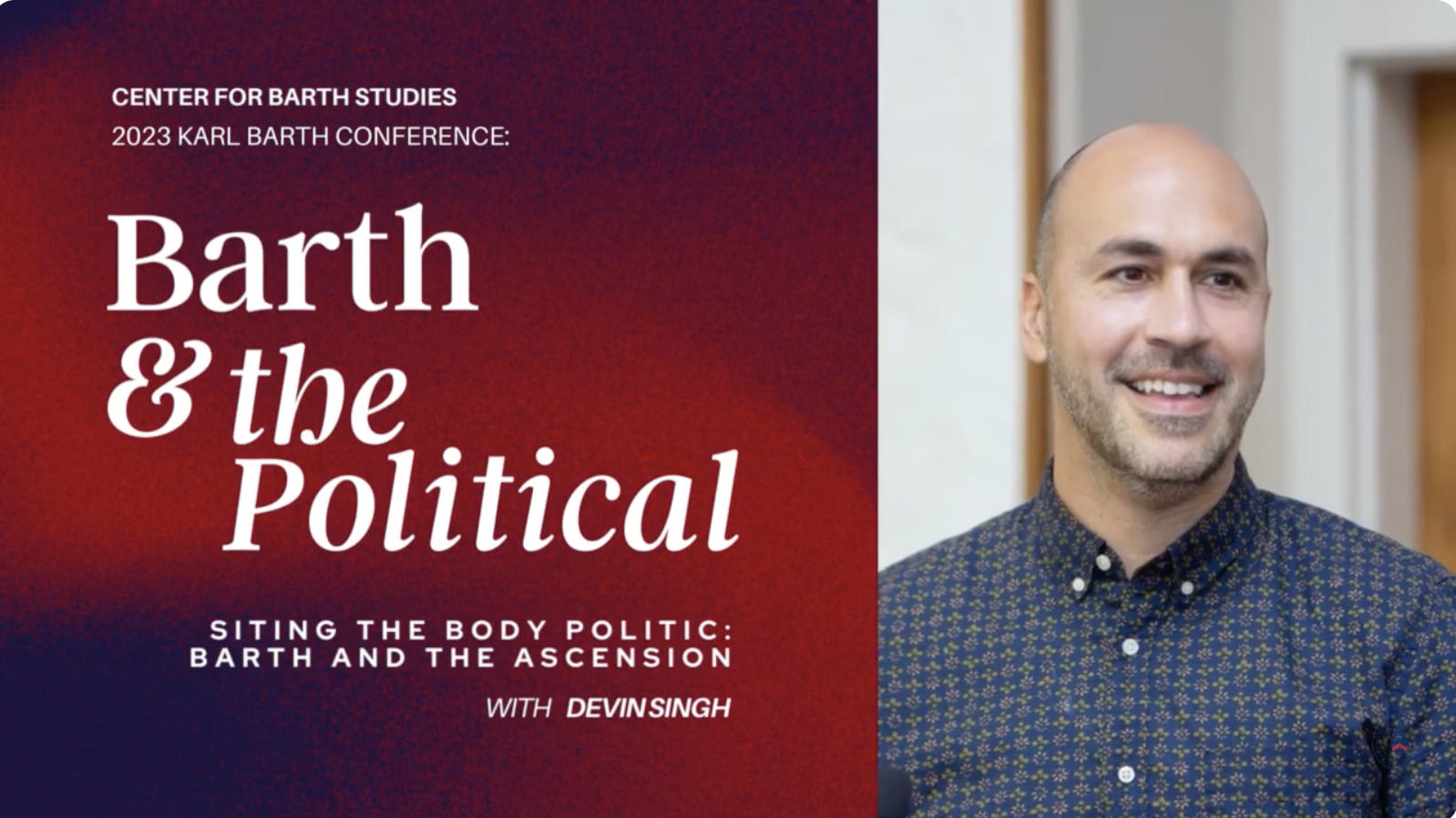
I was happy to deliver an invited keynote for “Barth and the Political,” the Karl Barth annual conference at Princeton Theological Seminary and the Center for Barth Studies, Jun 2023.
I spoke about the suppressed role of the doctrine of the ascension in Christian thought and legacy, and reflected on Barth’s work on this topic.

I speak with Bradley Onishi about cryptocurrency, religion, ethics, and presence.
Listen here

Together with Michelle Sanchez of Harvard Divinity School, I review and respond to Benjamin Friedman’s recent book, Religion and the Rise of Capitalism.
https://cswr.hds.harvard.edu/news/2021/04/26/video-religion-and-rise-capitalism

I enjoyed this conversation with Daniel Lev Shkolnik, host of the Re-Enchantment podcast, about religion and cryptocurrency.
Have a listen as we discuss what cryptocurrency is, and how it relates to religious and spiritual hopes and dreams for human society. We discuss the history and nature of money, and blockchain based religions!
https://www.daniellevshkolnik.com/podcast-episodes/episode/3574d89d/crypto-religions-or-devin-singh

Here I speak with Rachel Muers, professor at University of Leeds and host of the Cultural Life of Money and Finance Podcast. We discuss my book, Divine Currency, and topics such as money and war, money and religion, and money and politics. It was a very fruitful conversation.

In this podcast, I speak with Camelia Raghinaru of the Telos Podcast, and summarize my article appearing in Telos that engages Carl Schmitt and Giorgio Agamben on questions of sovereignty and exception.

Singh, Devin. 2018. Divine currency: The theological power of money in the west. Stanford: Stanford University Press.
With contributions by Anna-Riikka Kauppinen, Scott MacLochlainn, Bill Maurer, Daromir Rudnyckyj, and Devin Singh.

In this contribution to a Political Theology Network symposium on economic and political theology, I explore the erasure of the human and the depoliticizing of money that take place in current approaches to the economy.

A conversation with Professor Devin Singh, Associate Professor of Religion at Dartmouth College.
Professor Singh discusses "Should We Cancel Debt? Insights from the Ancient World?" Interview by Dartmouth student Sydney Towle '22. Edited by Laura Howard. Music: Debussy Arabesque no 1. Composer: Claude Debussy
Listen on Apple Podcasts
Listen on Spotify