Roundtable: Blockchain and Belief
In this roundtable discussion I joined scholars and practitioners to discuss blockchain, cryptocurrency and religion.
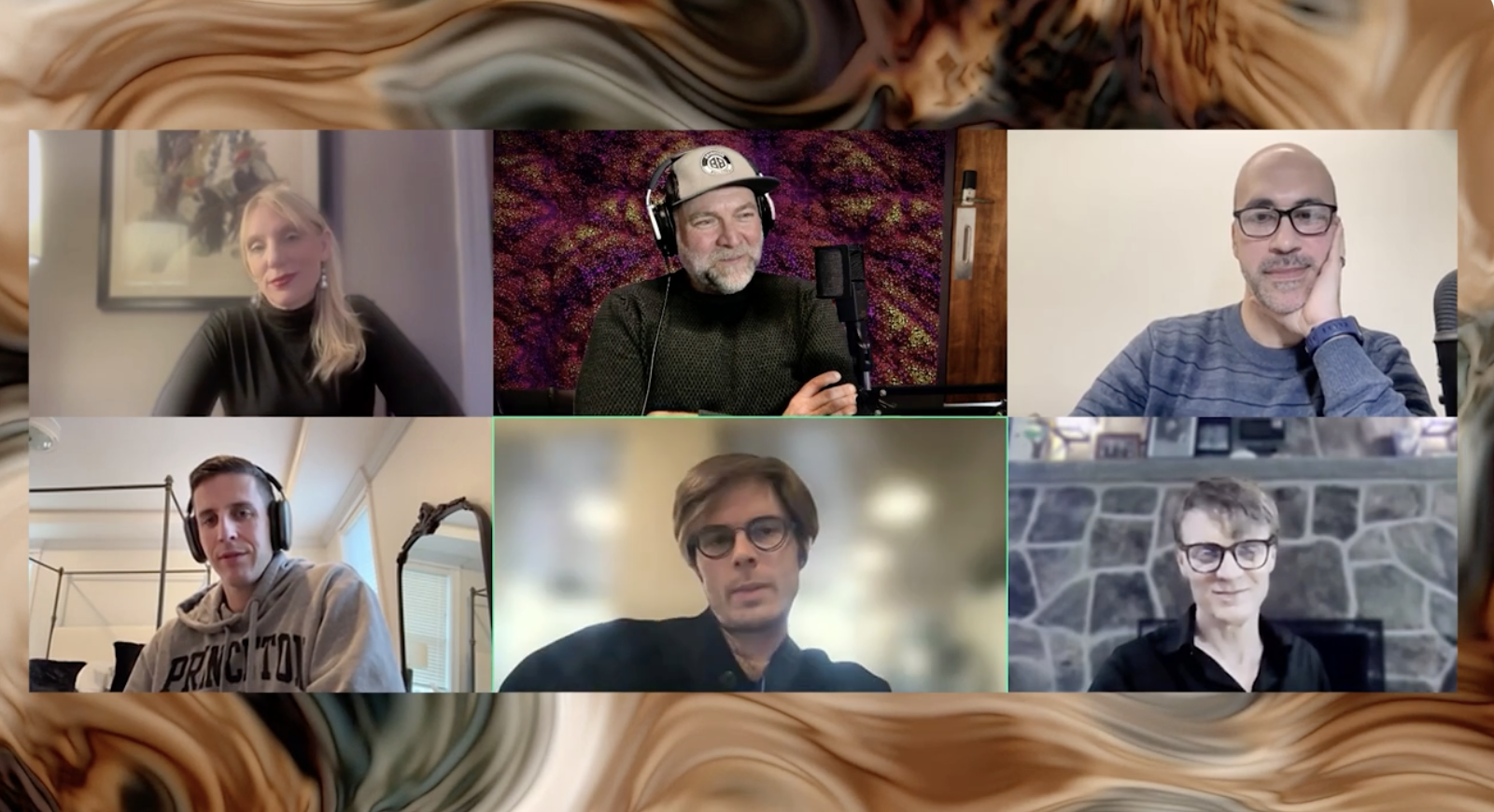
In this roundtable discussion I joined scholars and practitioners to discuss blockchain, cryptocurrency and religion.
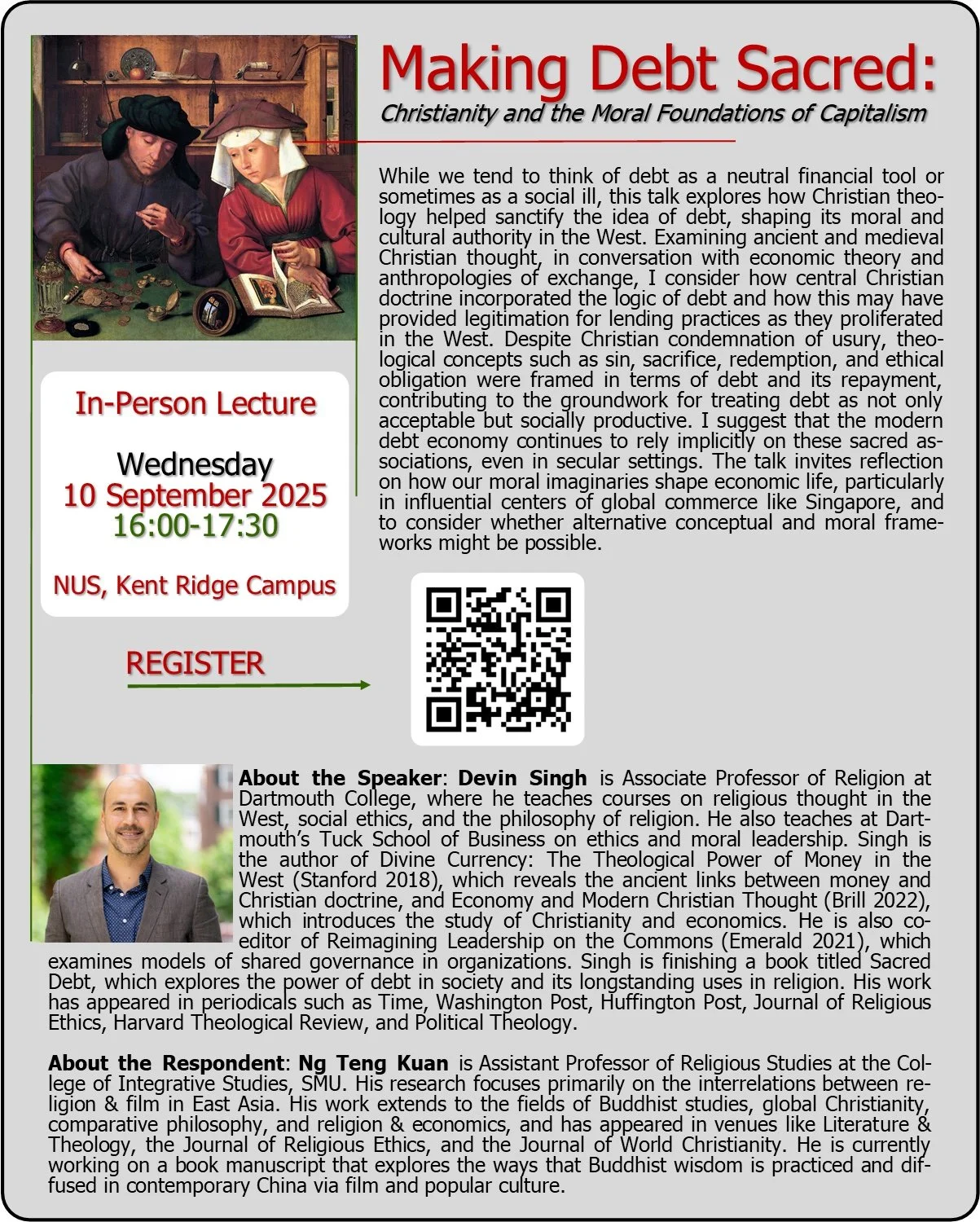
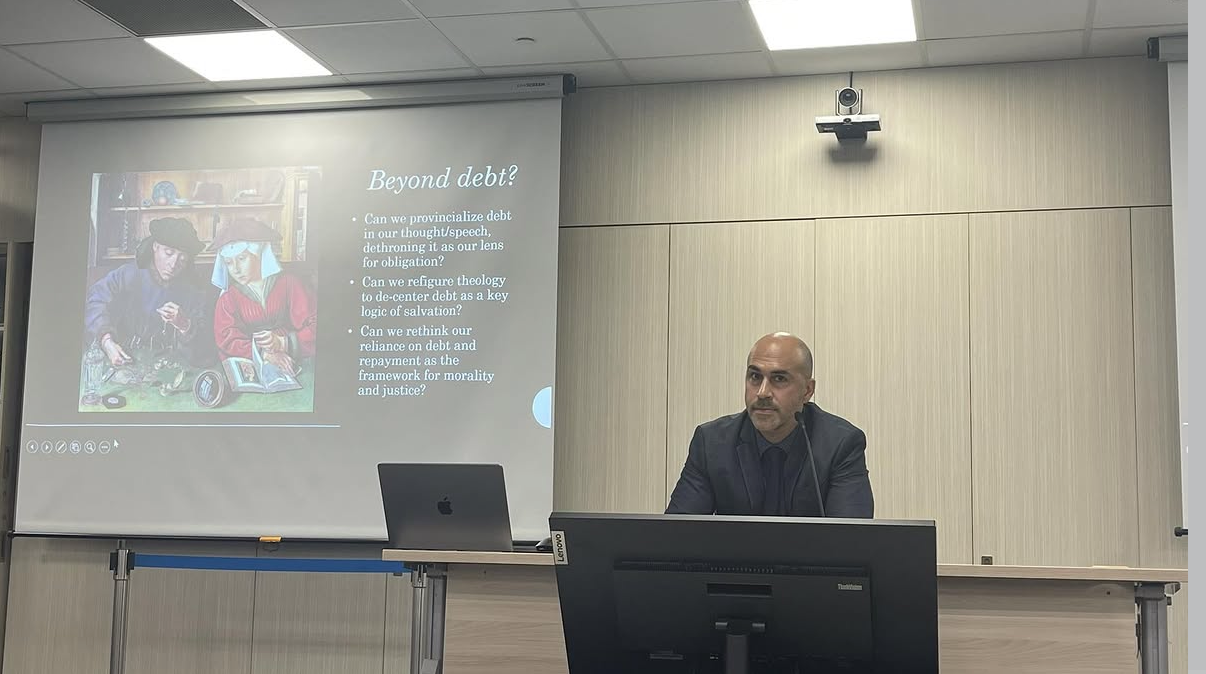
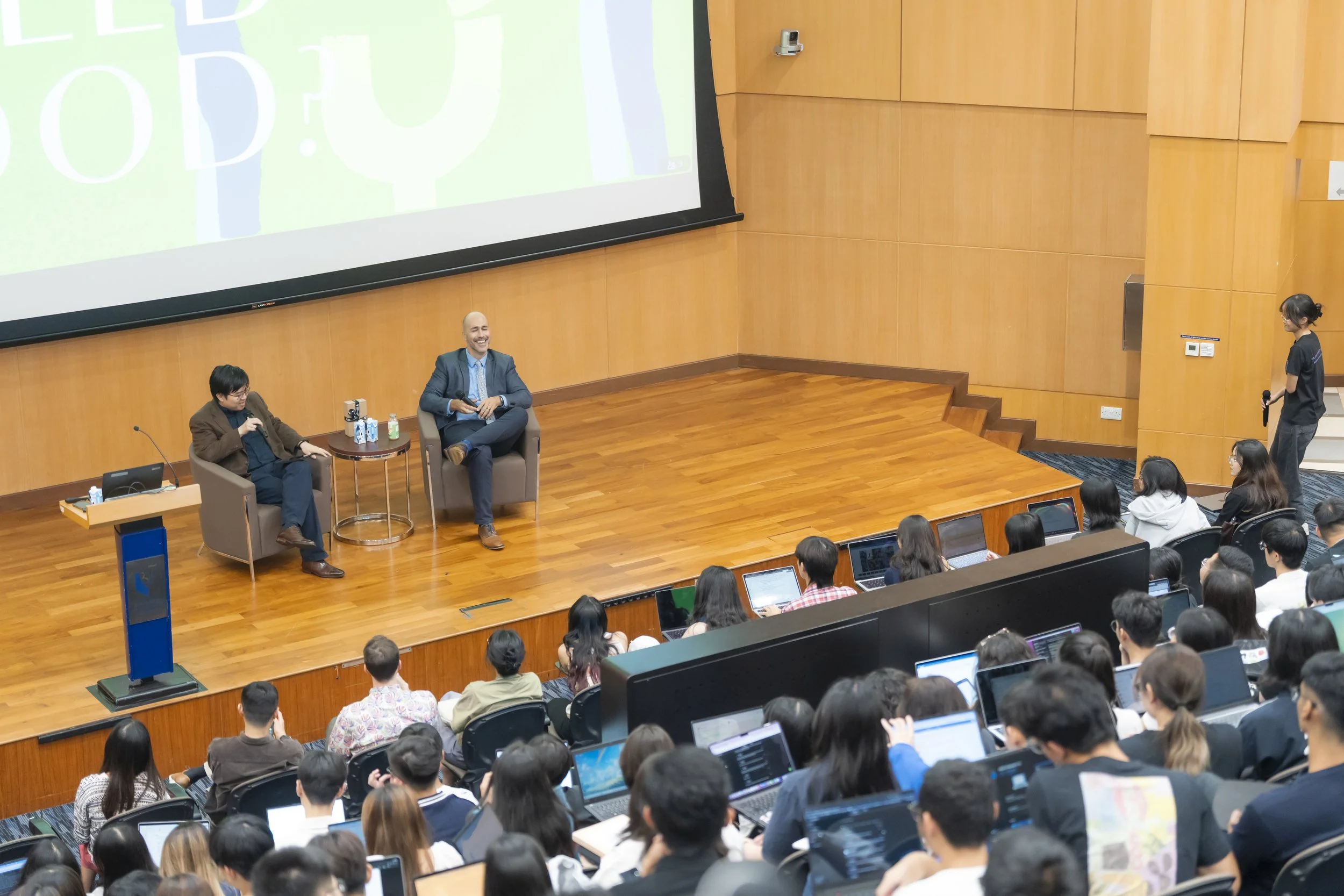
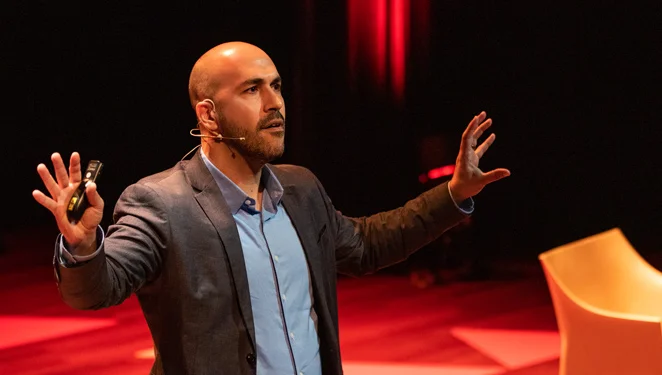
I was thrilled to speak at National University Singapore on debt, the sacred, and the moral foundations of Capitalism.
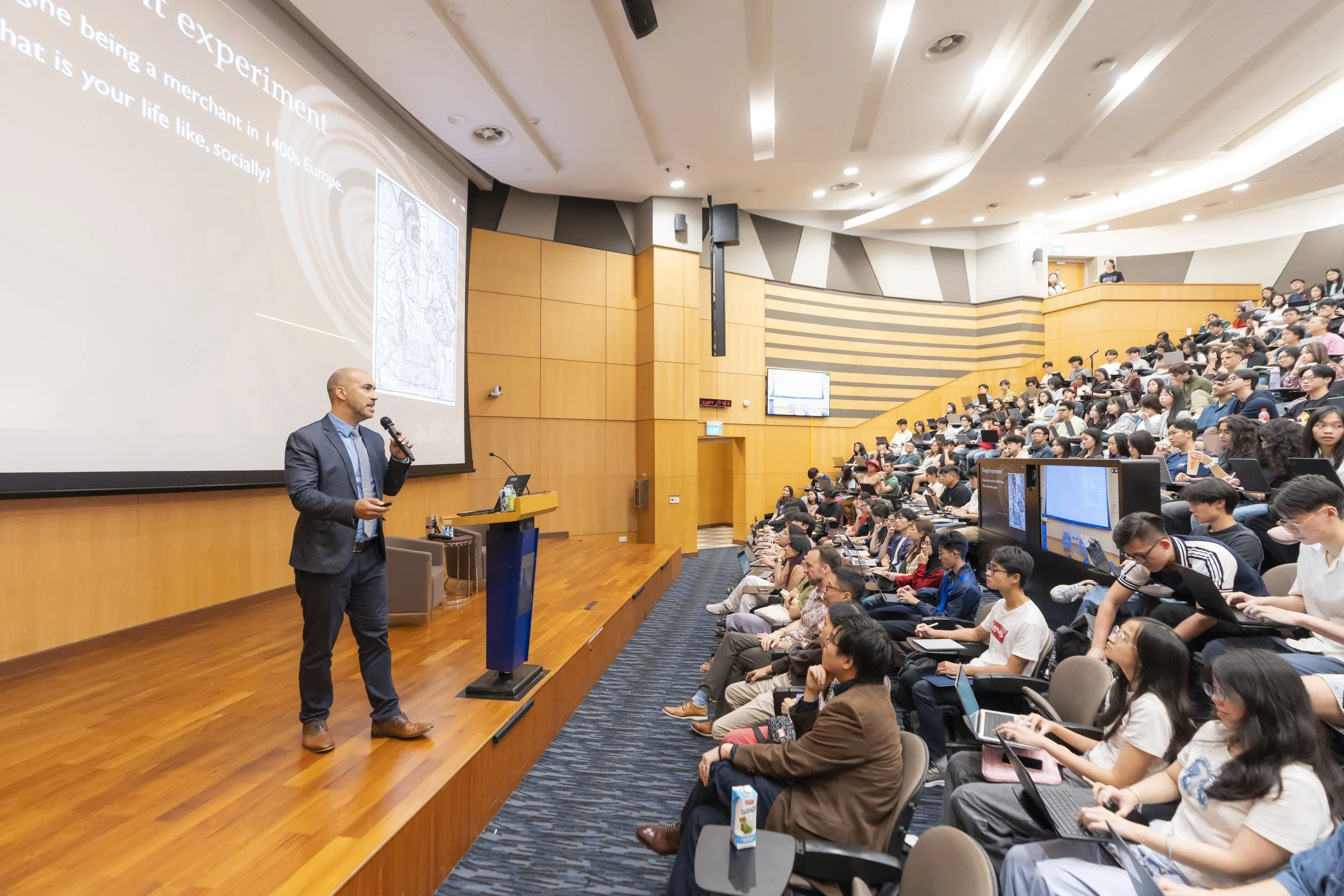
Synopsis:
For centuries, Christian theology cast greed and avarice as grave moral failings, corrosive both to the soul and to society. Yet in modern economic thought, a radical reimagining took hold: greed and self-interest were no longer merely vices to suppress, but engines of productivity, innovation, and wealth. How did this shift occur and what does it mean for us today? This lecture recalls the theological and philosophical origins of the idea of beneficial self-interest, as it both used and departed from earlier Christian moral teachings. We examine what “greed” and “self-interest” mean and ask whether they bring satisfaction, fulfillment, and communal connection. We also consider visions of economic life involving cooperation, reciprocity, and mutual flourishing, exploring alternatives to zero-sum competition and the possibility of more humane and sustainable forms of exchange.
I recently joined the great John Caputo for a conversation hosted by GCAS and Creston Davis to discuss the implications of the election of Pope Leo XIV, the first pope from the United States and only second pope hailing from a non-predominantly Catholic country.
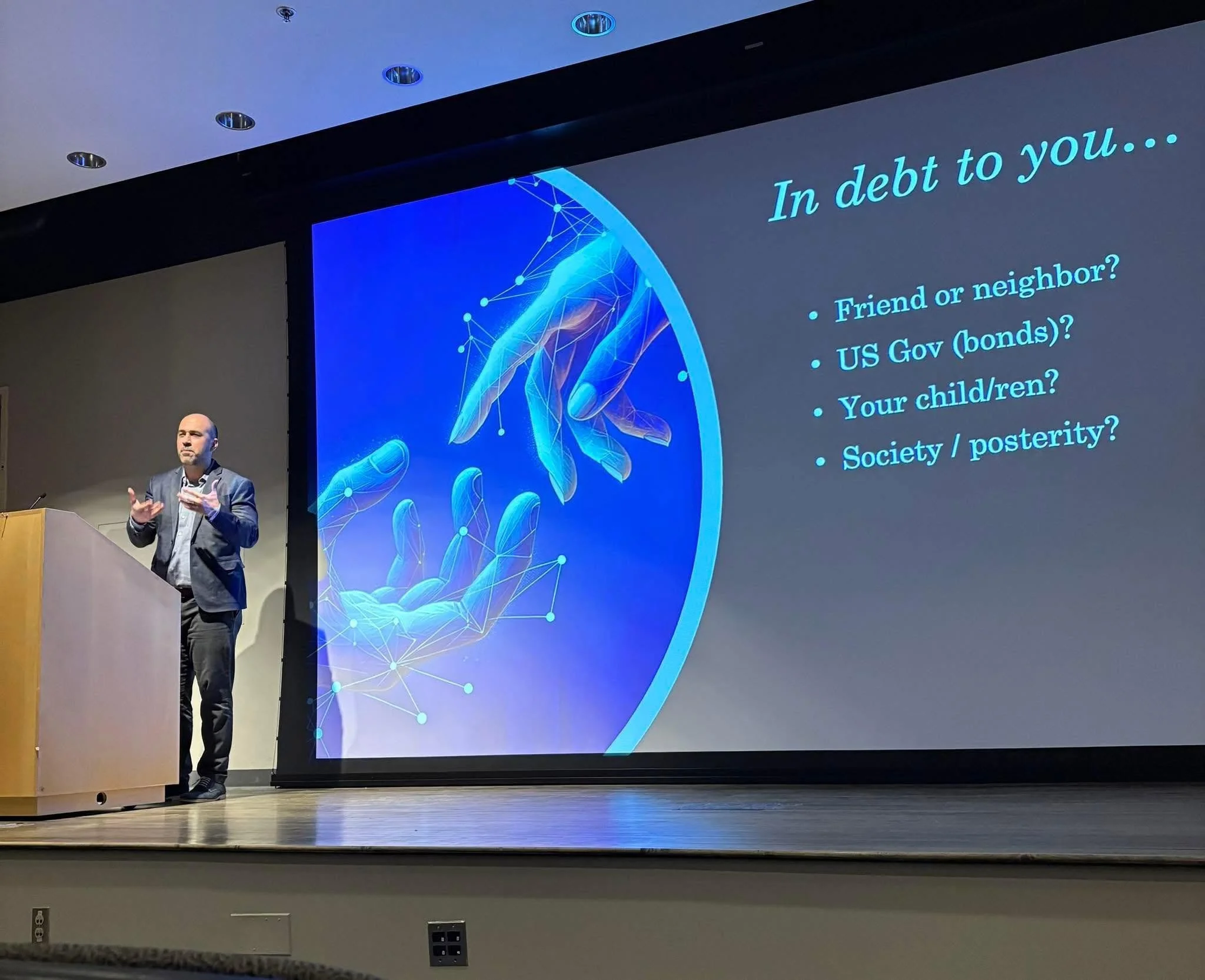
I spoke on “The Theological Weight of Debt” to students and faculty at St Olaf College. It was a wonderful visit and set of conversations.

In spring 2023, Dartmouth’s Design Initiative held the first gathering of award-winning speculative fiction sci-fi and fantasy authors who met with a small group of faculty.
We faculty shared our research and had intensive conversations and design thinking exercises with these authors. The goal was to provide inspiration for them to write short stories imagining human futures in light of our research. The plan is to disseminate research in a more accessible, engaging way through the power of story and to flesh out possible futures.
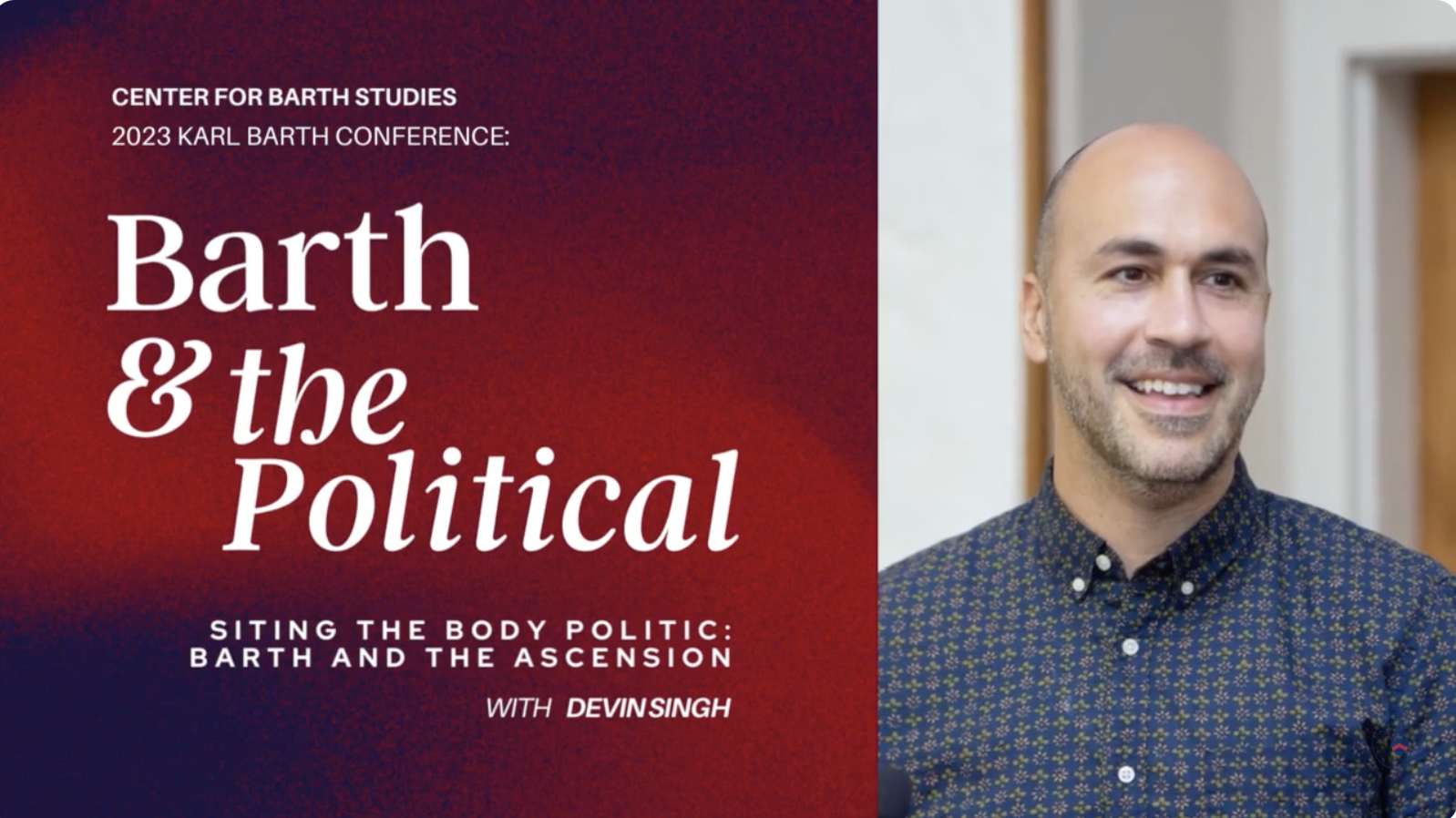
I was happy to deliver an invited keynote for “Barth and the Political,” the Karl Barth annual conference at Princeton Theological Seminary and the Center for Barth Studies, Jun 2023.
I spoke about the suppressed role of the doctrine of the ascension in Christian thought and legacy, and reflected on Barth’s work on this topic.

Singh, Devin. 2018. Divine currency: The theological power of money in the west. Stanford: Stanford University Press.
With contributions by Anna-Riikka Kauppinen, Scott MacLochlainn, Bill Maurer, Daromir Rudnyckyj, and Devin Singh.

"“Life in a pandemic has revealed much about our relationship to money, especially as we weigh the many costs of sheltering in place alongside the value of human life. This presentation and conversation will explore Christian reflection on the economy, money, and human value. Particularly given the current crisis and the tendency to pit human lives against economic value, what theological resources exist for thinking about these issues? What practical steps have Christians taken over the centuries to love their neighbors economically, and how have they failed to do so, and how might these insights be helpful now?”

Anyone in a leadership role who is interested in how leadership and management practices are shifting, please consider signing up for this free virtual leadership summit in June. There is quite a line up of amazing and interesting speakers, covering two full days of sessions on a range of important topics.

Welcome to Rocky Watch: A Series of Public Policy Discussions! Each week we will be broadcasting a live event with a public policy expert. Join us on Zoom to hear the latest and contribute to the conversation with our Q&A at the end of each session.
Is debt a moral issue and should excessive indebtedness in society be challenged and remedied? The financial crisis of 2007-2008—not to mention our current economic crisis—have intensified concerns about growing indebtedness in the US and globally. Economic analyses about the realities of debt are often accompanied by philosophical and ethical language about the need to address such large scale indebtedness, whether through debt cancelation or other interventions.
These ideas have been imparted to us from the ancient world in part through religious traditions that condemn excessive indebtedness and warn of the dangers of usury. Following the thread of these traditions back to the ancient Near East takes us to periods where debt instruments first appear on the scene and become a staple of human civilization.
Examining the conditions of debt’s historical emergence gives us insights into why debt remains so firmly established in our societies. It also complicates projects of liberation from the unjust economic relations that debt creates. In this presentation, Devin Singh will share from his current research into the philosophical, ethical, and religious aspects of debt, making the link to contemporary concerns about the prevalence of debt in modern societies.

The journal Modern Theology hosted a review symposium on Kathryn Tanner’s Christianity and the New Spirit of Capitalism as well as on Divine Currency. Reviews provided by Nichole Flores (UVA), John Thiel (Fairfield), David Cloutier (CUA), and Philip Goodchild (Nottingham) with responses by Tanner and myself.
Go here to access the issue, or contact me for a PDF if you don’t have access.

(DesSoterramento III by Yohana Junker. www.yohanajunker.com )
The Drew University Graduate Division of Religion is pleased to announce its 19th Transdisciplinary Theological Colloquium to be held on March 14th and 15th, and corresponding Graduate Student Symposium on March 13th, 2020. The conversations will be centered around our conference theme: Assembling Futures: Economy, Ecology, Democracy.
What is the relationship of religion to economy, ecology, and democracy? In our fraught moment, what critical questions about democratic processes, ecosystems, and economic structures are in need of (dis)assembly? What possible futures might emerge from transdisciplinary work across these traditionally siloed scholarly areas of interest? By bringing together scholars in religious, theological, and biblical studies, this 19th Transdisciplinary Theological Colloquium seeks to activate perspectives urgently needed in assembling possible futures.
Participants: J. Kameron Carter, Gary Dorrien, Paulina Ochoa Espejo, Marion Grau, Catherine Keller, Hyo-Dong Lee, Kathryn Lofton, Marcia Pally, Jennifer Quigley, Joerg Rieger, Devin Singh, Kathryn Tanner.

Very excited about my upcoming lecture at UPenn. Hosted by the Collegium Institute and co-sponsored by the Department of Religious Studies, Penn PPE, the Andrea Mitchell Center for the Study of Democracy, and the Program for Research on Religion and Urban Civil Society. To be held in a lecture hall at Wharton.
I look forward to the conversation!
Abstract:
This lecture explores how understandings of debt and interest are bound up with assumptions about what counts as reproduction, and how both interest and reproduction reflect anxieties about the scarcity of life and resources. Drawing on alternative labor theories, the paper examines what it means to say that money works to produce more of itself, and whether recent anti-work interventions offer productive insights for reining in the proliferation of debt. Ultimately, a reconsideration of the centrality of productive labor to human identity may provide resources for challenging the centrality of productive, debt-based finance to our economic imaginations.
Dec 4, 2018
In this public lecture, for “Radboud Reflects,” a program hosted by Radboud University, Nijmegen, I explain some of the main themes from my book, Divine Currency, and ask how God and greed may be more closely related than we assume.
I was recently invited to join the Westar Institute's annual gathering in Santa Rosa, CA, as part of a new discussion in their God Seminar on decolonizing theology. Mary Keller (Wyoming), An Yountae (Northridge) and myself were asked to share reflections about theism and post-theisms in light of post- and decolonial thought. I spoke on the question of the secular in light of decolonial reflection, arguing that some notion of the secular as a space to protect difference should be preserved, and perhaps can be theologically legitimated and defended from a variety of religious and humanist traditions, suggesting that the decolonial turn may open up new perspectives on the question.
It was a lovely gathering of scholars, including Jeff Robbins, Clayton Crockett, Karen Bray, Noelle Vahanian, John Caputo, Wilson Dickinson, Jordan Miller, Michael Zbaraschuk, Sarah Morice Brubaker, and Mike Grimshaw. This was a chance for me to learn about the interesting work of the institute and seminar, and consider some of the contemporary challenges being tackled.
Since we were in prime wine country, some of us were able to sneak off to sample the local varietals.


I recently spent a few days on the campus of Saint Paul's School in Concord, NH, as part of their Chapel Program review committee, where they gathered a team of external reviewers to assess their fulfillment of their mission on campus.
As part of this visit, I was invited to address their community in their morning chapel. This gathering of their entire student body and faculty took place in their impressive and imposing Chapel of St Peter and St Paul. I took the opportunity to speak about a topic that has remained near and dear to my heart for most of my life: anger.
Our attitude toward anger is ambivalent, at best. Usually, it is an emotion and affective state that is feared, resisted, and repressed... until it explodes. In these brief reflections, I suggest a slightly different attitude toward anger, one that recognizes it as a major resource in our lives for change.
I recently participated on a panel as part of a broader conference on Christianity, Race, and Mass Incarceration at Harvard Divinity School:
"Christianity, Race, and Mass Incarceration will gather scholars of various disciplines in conversation alongside activists, organizers, and formerly incarcerated persons. We hope to advance through this workshop a critical study of carceral punishment, especially as it relates to questions of Christian thought and practice, and to provoke awareness and activism around incarceration in America."
After a first, brilliant panel on "Religion and the Historical Roots of US Incarceration" followed by a second, equally brilliant and hard-hitting panel on "Race and Religion in Modern Mass Incarceration," the third panel was a "Theology and Humanities Roundtable" where scholars shared their perspectives on how their work relates to this pressing social and conceptual problem.
On the panel, I was accompanied by Michelle Sanchez, Todne Thomas, Cornel West, and Andre Willis:

Pictured: Cornel West, Devin Singh, Todne Thomas, Andre Willis, Michelle Sanchez
My brief remarks, titled "Guilty Debt? The Economy of Carcerality" emphasized the role of debt in supporting imaginaries that deem pain and punishment an appropriate "repayment" for crimes committed and that construe indebtedness as moral culpability and guilt.

I also asked whether Christian theories of salvation that make repayment of the "debt" of sin a central piece might not be reinforcing this broader social imaginary that sacralizes and centers on debt. Can we rethink salvation outside of the terms of redemption, recompense or repayment?

Watch the full video of this particular panel: